Generative Design: Practical Tools & Trends for Architects
Explore how generative design tools like Finch and AI-driven workflows are transforming architecture from floor plan automation to structural optimization.


Moving Beyond the Hype: Generative Design for SMEs
For many small-to-medium enterprise (SME) architecture firms, "generative design" often sounds like a luxury reserved for global practices or academic research. However, a deep dive into recent developments highlights a shift from theoretical art installations to practical, efficiency-driving tools. The focus is moving away from purely aesthetic algorithmic forms toward solving concrete constraints - specifically in space planning, structural efficiency, and bespoke fabrication.
The "Killer App": Automated Space Planning
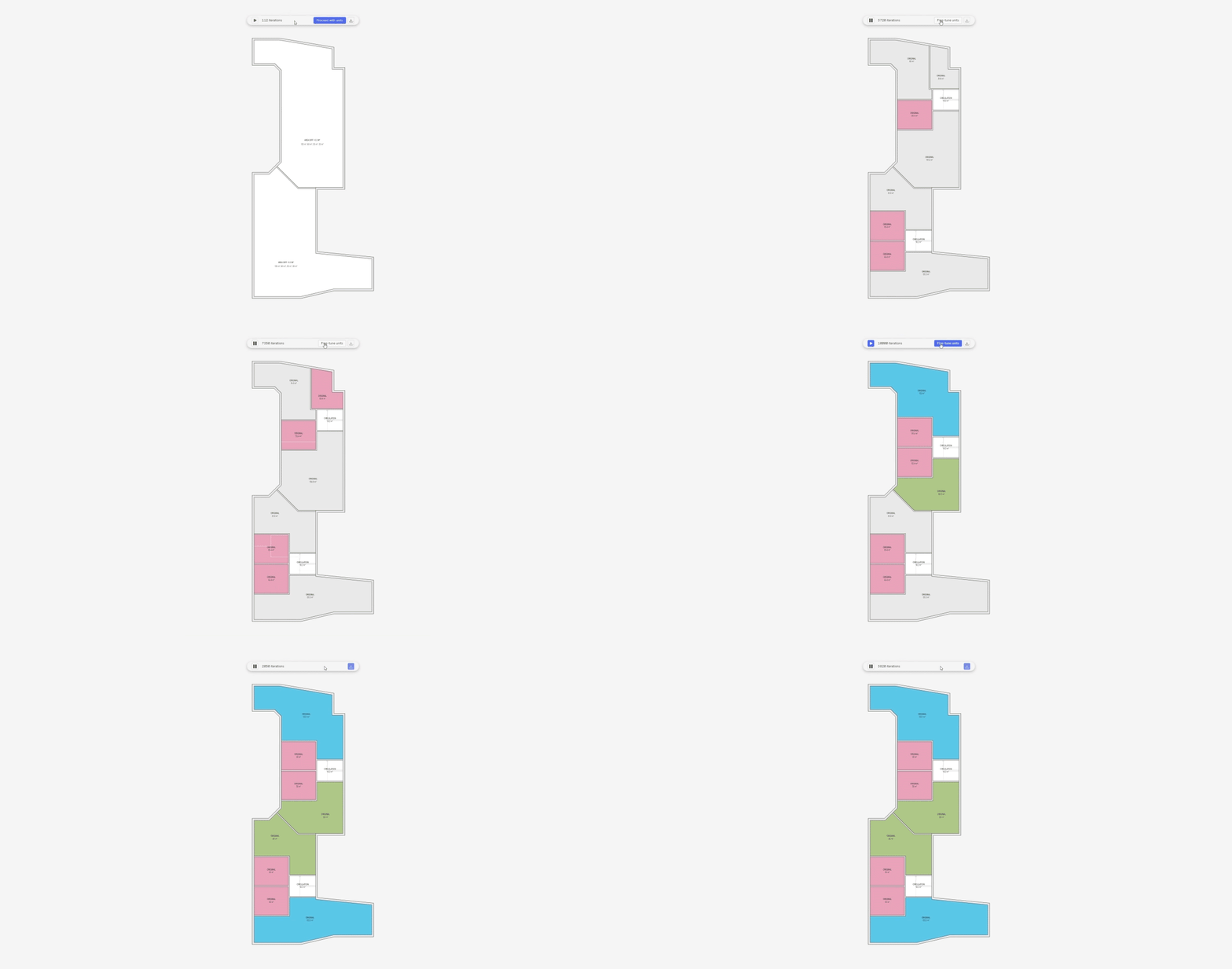
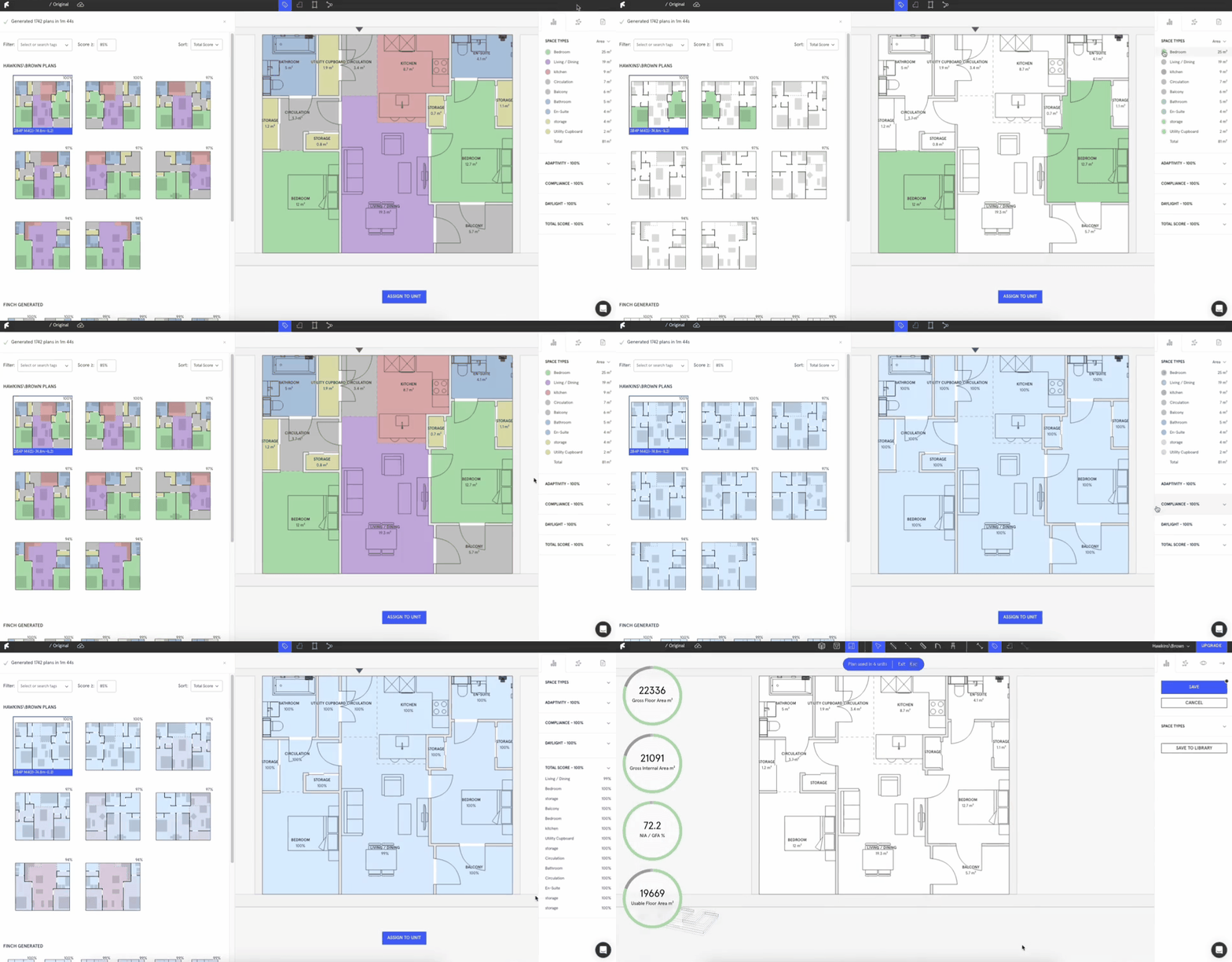
The most immediate value for small firms lies in early-stage feasibility and layout generation. The content highlights Finch, a parametric design tool created by architecture studio Wallgren Arkitekter and construction company BOX Bygg. Unlike abstract experiments, Finch is designed to generate floor plans that adapt automatically to site constraints. For an SME, adopting a tool like Finch (or similar competitors like TestFit) can drastically reduce the hours spent on iterative residential unit mixes and zoning checks, allowing senior staff to focus on design quality rather than repetitive drafting.
Internal R&D as a Service
Another emerging trend is the formalisation of computational design within firms. Antonio Citterio Patricia Viel (ACPV) launched ACPVLab, a dedicated R&D unit focused on using generative design for bespoke interiors. While most SMEs cannot fund a full lab, the lesson here is the specialisation of workflows. Firms are increasingly using algorithms to differentiate their service offering - creating complex, site-specific interior elements that would be impossible to draw manually but are cost-effective to fabricate using digital manufacturing.
Structural and Material Optimization
On the engineering side, the influence of NASA's AI-driven hardware development - which created components significantly stronger and lighter than human designs - signals a future where generative design dictates structural coordination. In the architectural context, this mirrors the work of researchers like Joel Simon, whose algorithms optimize floor plan efficiency to reduce wasted circulation space. Furthermore, the collaboration between Autodesk and Philippe Starck to produce the first AI-designed production chair demonstrates that generative workflows are now mature enough for mass manufacturing, not just one-off art pieces.
Strategic Implementation
For architects, the path forward involves identifying repetitive tasks - such as bathroom layouts, parking grids, or facade panelization - and applying generative scripts to handle them. The technology has graduated from "experimental" to "operational," offering a tangible competitive advantage in speed and precision.
Key Takeaways
• Adopt Constraint-Based Tooling: Tools like Finch (developed by Wallgren Arkitekter) demonstrate that the highest ROI for generative design is currently in automating floor plans and site feasibility studies.
• Differentiation Through Computation: Firms like ACPV are using generative design not just for efficiency, but to offer bespoke interior design services that competitors cannot replicate manually.
• Material Efficiency: Lessons from NASA and Joel Simon's research show that algorithmic design can significantly reduce material weight and wasted space, a critical selling point for sustainability-focused clients.
Practical Application
• Feasibility Automation: Implement tools like Finch or TestFit during the pre-design phase to generate multiple compliant site layout options in minutes rather than days.
• Bespoke Fabrication: Use parametric scripts (Grasshopper/Dynamo) to design complex interior features (ceilings, wall panels) that can be directly exported to CNC or 3D printing fabricators, similar to the MHOX workflow.
• Urban Analysis: Utilize algorithmic growth patterns (as researched by Universidade da Coruña) to present data-driven master planning narratives to municipal clients.